How to Choose a Web Designer in Brisbane: 10 Things to Check
In This Article
10 Things to Look for in a Website Designer
Why Squarespace Is Great for Small Businesses
Questions to Ask Before Hiring a Web Designer
Red Flags to Watch Out For
How Much Does Website Design Cost in Brisbane?
Why Your Web Designer Should Understand Marketing
Frequently Asked Questions
Choosing someone to design your website is a pretty big decision.
After all, your website is often one of the first places potential clients go to learn about your business, explore your services and decide whether you're the right person to work with.
And with so many website designers in Brisbane offering different packages, prices and platforms, it can be difficult to know what you're actually paying for.
Because here's the thing.
A beautiful website doesn't automatically mean it's a good website.
Your website should look great, absolutely. But it should also communicate your value, attract the right people and make it easy for them to take the next step.
So, if you're wondering how to choose a web designer in Brisbane, here are 10 things I'd recommend looking for before making your investment.
What should you look for in a website designer?
Look for a web designer with a strong portfolio, a clear design process, transparent pricing and an understanding of SEO, user experience and marketing strategy. Most importantly, choose someone who takes the time to understand your business goals and can explain how your website will support them.
1. A portfolio that shows more than pretty designs
Of course, the first thing you're probably going to look at is their portfolio.
And while it's important that you like their design style, I'd encourage you to look a little deeper.
Click through to the actual websites they've created.
Are they easy to navigate? Is the messaging clear? Can you quickly understand what the business offers? Does the website make you want to enquire?
A good website should do more than look impressive in a screenshot.
It should create a great experience for the people actually using it.
I'd also recommend looking for designers who have experience working with businesses similar to yours, whether that's service providers, creatives, coaches or personal brands.
2. Someone who understands your business goals
This is a big one.
If your website designer starts talking about colours, fonts and layouts before asking about your business, I'd be asking a few more questions.
Because website design shouldn't start with the design.
It should start with understanding your business.
Who are your dream clients? What makes you different from your competitors? What do you want people to do when they land on your website? What are your plans for growth?
These are the things that should influence how your website is structured, written and designed.
For example, a photographer wanting to attract premium wedding clients needs a very different website strategy from a consultant selling high-ticket services.
The design should support the strategy, not the other way around.
3. SEO knowledge from the beginning
There's not much point having an incredible website if nobody can find it.
Search engine optimisation (SEO) helps search engines understand your website and can improve your visibility when people search for services like yours.
And while SEO is an ongoing process, there are important foundations that should be considered during the website build.
These include:
Clear page titles and meta descriptions
A logical website structure
Relevant keywords throughout your content
Mobile-friendly layouts
Optimised images
Internal links between relevant pages
Search engine indexing and tracking
If you're a Brisbane business, local SEO may also be important.
For example, if you're a psychologist in Brisbane, you'll want your website to clearly communicate what you offer, where you're located and who you work with.
I'd recommend asking your designer what SEO work is actually included in their package.
Because there's a big difference between a website that's technically capable of ranking on Google and one that's been strategically optimised for search.
4. A mobile-friendly website
Think about how often you look up a business on your phone.
Probably pretty often, right?
Your potential clients are doing exactly the same thing.
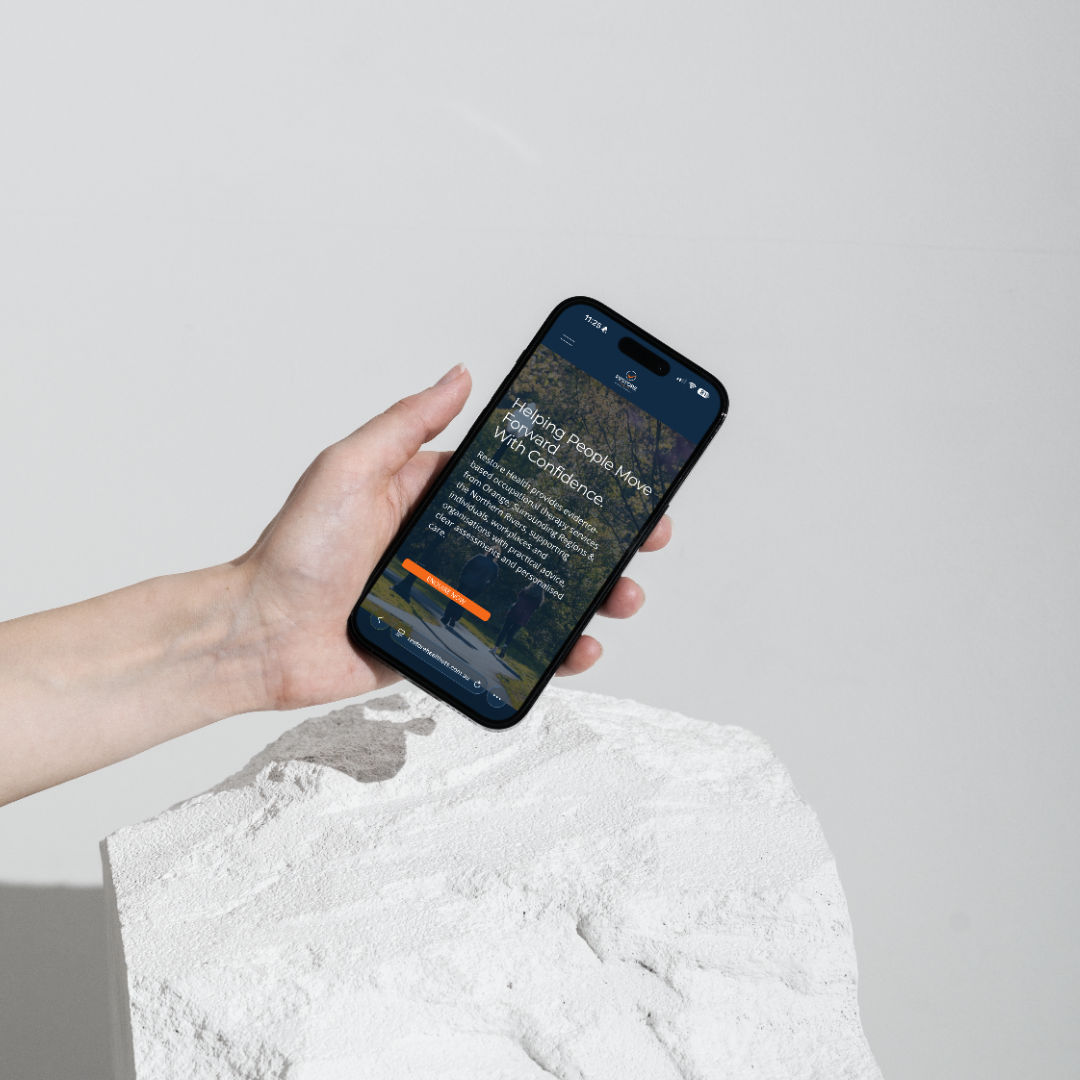
That's why your website needs to look and function just as well on mobile as it does on desktop.
Buttons should be easy to click, text should be readable and visitors shouldn't have to zoom in or scroll sideways to find what they're looking for.
When reviewing a designer's portfolio, I'd recommend opening a few of their websites on your phone.
It's a simple way to see whether they're considering the full user experience.
5. Clear and transparent pricing
Website design pricing can vary enormously.
And one of the reasons for that is that not all website packages include the same things.
One designer might be offering a five-page website using an existing template.
Another might be including business strategy, brand identity, custom design, website copy and SEO foundations.
They're two very different services.
Before comparing prices, make sure you understand exactly what's included.
Ask about the number of pages, copywriting, revisions, branding, SEO, training and any additional costs.
You'll also want to understand ongoing expenses such as your domain and website platform subscription.
A cheaper website isn't necessarily better value if you end up paying someone else to fix or rebuild it six months later.
6. A platform that actually suits your business
WordPress, Squarespace, Shopify, Webflow. There are plenty of website platforms to choose from.
And the right one depends on what your business needs.
For many service-based businesses, I love Squarespace because it offers a balance of beautiful design, functionality and ease of use.
You can manage your website content, publish blogs, update images and make everyday changes without needing to understand code.
Squarespace also handles hosting, platform updates and core security infrastructure, which can simplify ongoing website management.
But it's not necessarily the right choice for everyone.
A business with complex e-commerce requirements, extensive custom integrations or highly specialised functionality might be better suited to another platform.
A good website designer should be able to explain why they recommend a particular platform, rather than simply using it because it's the only one they know.
7. A website you can actually update yourself
Imagine needing to email your website designer every time you want to update your prices, change a photo or add a new service.
Not ideal.
Your website should be something you feel confident managing after it launches.
This is one of the reasons I'm such a big fan of Squarespace for small businesses.
Its visual editor makes it relatively straightforward to update content without needing ongoing developer support.
Before hiring someone, ask whether you'll receive training or a walkthrough of your new website.
And make sure you understand who will own and control your website, domain and connected accounts.
You should never feel like you're locked into working with someone simply because they're the only person who knows how to access your site.
8. A clear design process and realistic timeline
Building a website involves quite a few moving parts.
There's strategy, content, design, development, testing and launch.
And without a clear process, things can get messy pretty quickly.
Before you commit, your designer should be able to explain what happens at each stage of the project.
You should know what they'll need from you, when you'll be reviewing designs, how feedback works and when you can expect your website to launch.
A clear process makes the whole experience easier for everyone involved.
And if you're working towards a particular launch date, make sure you discuss that before signing anything.
9. Reviews, testimonials and real client experience
A portfolio shows you what a designer can create.
Client reviews can give you a better understanding of what it's actually like to work with them.
Look for feedback about communication, organisation, professionalism and how well the designer understood the client's business.
Did they deliver on time? Was the process straightforward? Did the client feel supported?
It's also worth looking for case studies or examples of measurable outcomes.
While a website designer can't guarantee a certain number of enquiries, they should be able to explain how their work has helped previous clients improve their online presence or business performance.
10. Someone who understands marketing, not just design
I've saved this one for last because I think it's one of the most important.
Your website isn't just an online brochure.
It's a marketing tool.
And if your designer doesn't understand how people discover, evaluate and choose businesses, you could end up with a beautiful website that doesn't actually help you grow.
Think about it.
You can have incredible photography, beautiful fonts and perfectly coordinated colours.
But if your messaging doesn't communicate why someone should choose you, what's encouraging them to enquire?
A website designer who understands marketing can help you think about the bigger picture.
From your positioning and messaging to your calls to action and the journey someone takes through your website.
Because the goal isn't just to get someone onto your website.
It's to give the right people a reason to stay.
Why Squarespace is a great option for small businesses
If you're researching website designers in Brisbane, you've probably come across Squarespace.
And there's a reason it's become a popular choice for creatives, consultants and service-based businesses.
It's a platform that allows you to create a professional, highly customised website without the complexity that can come with managing a more technical website setup.
Some of the benefits include:
Beautiful, flexible design capabilities
Easy content updates
Built-in blogging functionality
SEO settings and tools
Hosting and SSL included
Integrations for bookings, forms and email marketing
No separate plugin maintenance for core functionality
For established service-based businesses, it's often a great fit because your website can look premium while still being relatively easy to manage behind the scenes.
Of course, the platform itself is only one part of the equation.
A Squarespace website still needs good strategy, thoughtful design, clear messaging and proper SEO foundations.
Simply choosing Squarespace won't automatically make your website effective.
It's what you do with it that matters.
Questions to ask a web designer before hiring them
Before signing a contract, I'd recommend asking a few questions to make sure you're both on the same page.
What is included in your website design package?
Do you help with website copy and messaging?
What SEO work is included?
Can I see examples of websites you've built?
How many rounds of revisions are included?
What is the expected project timeline?
Will I be able to update the website myself?
Who owns the website and domain after launch?
What ongoing costs should I expect?
What support is available after the website goes live?
A good designer should be happy to answer these questions and explain their process.
Red flags to watch out for when choosing a web designer
There are also a few things I'd be cautious about when comparing website design services.
No strategy or discovery process. If someone is ready to start designing without understanding your business, they might be focusing more on aesthetics than outcomes.
Unclear pricing. You should know exactly what you're paying for and what might cost extra.
Guaranteed Google rankings. Nobody can genuinely guarantee you'll rank number one on Google.
No clear ownership arrangements. Make sure you understand who owns your domain, content and website account.
Poor communication. If communication is difficult before you've even started working together, that's worth considering.
No examples of previous work. It's reasonable to want to see what someone has created before investing in their services.
Templates presented as fully custom designs. There's nothing wrong with using a template, but you should know whether you're paying for a customised template or a completely custom website.
Ultimately, you want to feel confident that the person you're hiring understands your business and has a clear plan for bringing your website to life.
How much does website design cost in Brisbane?
This is probably one of the biggest questions business owners have when researching website designers.
And the answer is that it depends on what you're looking for.
A simple template-based website will generally cost less than a custom website that includes strategy, brand identity, messaging and a more involved design process.
It's important to understand what you're getting for your investment.
At Jayne Media, my signature website service is The Next Level Experience, designed for established creatives and service-based businesses who are ready for their online presence to reflect the quality of their work.
It's more than a website design package.
We work through your strategic positioning, messaging, brand identity and custom Squarespace website so everything feels aligned with where your business is going.
The investment starts from $5,900, depending on your project requirements.
When comparing quotes, I'd encourage you to think about the value of the entire experience, not just the number of pages you're receiving.
Why I believe your web designer should understand marketing
After working in marketing for years, one thing has become pretty clear to me.
A lot of businesses don't necessarily need more marketing.
They need a stronger foundation for the marketing they're already doing.
They've been showing up on social media, creating content and trying to attract new clients.
But their website doesn't reflect the quality of their work.
Their messaging isn't clearly communicating their value.
Or their online presence simply hasn't kept up with how much their business has grown.
And that's where strategy becomes so important.
At Jayne Media, I bring together marketing strategy, creative direction, brand identity and Squarespace web design.
So rather than starting with what your website should look like, we start with what your business needs to communicate.
Who are you trying to attract?
What makes your business different?
What do your dream clients need to understand before they're ready to work with you?
And how can we bring all of that together into an online presence that feels like the business you've worked so hard to build?
Because I'm not interested in designing something that just looks pretty.
I want your website to become an asset that supports your marketing, strengthens your positioning and makes it easier for the right people to choose you.
-
It depends on the size and complexity of the project, as well as how prepared your content and assets are.
A simple website might take a few weeks, while larger or more complex projects can take several months.
At Jayne Media, The Next Level Experience is designed around a streamlined three-week delivery process once onboarding is complete and the required materials are ready.
-
Both can be great options.
A freelancer or independent website designer can offer a more personal experience, often with direct communication throughout the project.
An agency may be better suited to larger projects requiring multiple specialists or more complex development.
The most important thing is finding someone whose experience, services and approach align with your business.
-
Absolutely.
Squarespace is designed to make website creation accessible, even if you don't have a technical background.
However, there's a difference between knowing how to use a website builder and knowing how to strategically position, structure, write and design a website that supports your business goals.
If your business is established and you're ready for a more premium online presence, working with an experienced designer can help you bring everything together.
-
Yes. Squarespace includes many of the technical features needed to support SEO, including editable page titles, meta descriptions, sitemaps, redirects and mobile-friendly design tools.
However, strong SEO also depends on your content, keyword strategy, website structure and ongoing optimisation.
-
Every website needs occasional updates, monitoring and improvements.
Squarespace manages much of the underlying hosting, security and platform maintenance, which reduces the amount of technical upkeep required.
You'll still need to keep your content current, review your website performance and make improvements as your business evolves.
Ready for a website that actually reflects your business?
If your business has grown but your website hasn't quite kept up, it might be time for something new.
At Jayne Media, I specialise in strategic Squarespace websites for creatives, service providers and personal brands who are ready to stop blending in and build an online presence they're genuinely proud of.
Through The Next Level Experience, we bring together your strategy, brand and website to create something that not only looks incredible but communicates the value of what you do.
And the best part? The experience is designed to take just three weeks once we're ready to begin.
Ready to take your online presence to the next level?
Book a free Growth Roadmap Call and let's talk about what your business needs.
If your business has grown but your website hasn't quite kept up, it might be time for something new.
At Jayne Media, I specialise in strategic Squarespace websites for creatives, service providers and personal brands who are ready to stop blending in and build an online presence they're genuinely proud of.
Through The Next Level Experience, we bring together your strategy, brand and website to create something that not only looks incredible but communicates the value of what you do.
And the best part? The experience is designed to take just three weeks once we're ready to begin.
Ready to take your online presence to the next level?
Book a free Growth Roadmap Call and let's talk about what your business needs.